Leek Planting and Garlic Lifting - Jobs for June


June is a really busy time (yes I know I say that every month) but it is partly psychological because there are two big tasks - planting out leeks and lifting garlic. In reality, lifting the garlic is a pretty quick job; it is the careful laying out and drying that takes the time.

Leek planting time can be any time from late May. My leeklings are rarely big enough to go out before mid-June, although this year they look pretty good so I'm planning on the first cool day of the month, hopefuly after some rain. I usually spread the job over two days because it is hard on the old back! 

Repeat sowing continues - lettuces, radishes, turnips, beetroot, dwarf beans, possibly peas (depending on the weather), radicchio and perpetual spinach. I'll also be sowing January King cabbage, Florence fennel.


This is a month of management and also starting to harvest. Everything needs protection against slugs, snails and the weather, with the risk of blistering heat and torrential rain or hail storms, possibly all on the same day! A quick tidy up tying in clematis, dead-heading roses can easily swallow a morning.

The broad beans are nearly finished, their end hastened by galloping chocolate spot, a destructive fungal infection. I may have to rethink my broad bean strategy for next year. In the cleared space, I will add more garden compost and start planting out brassicas for the winter and next spring.

Feeding - weekly feeding with comfrey tea starts in June. Although the potassium levels are higher than those of nitrogen in comfrey aiding flowering and fruit productions over leaf and general growth, the nitrogen levels are still high enough to be of benefit. See here for an earlier post on making comfrey tea.

The tomatoes will need to be regularly pruned, removing the side shoots on the indeterminate varieties so they can be managed as a single cordon on a string. The 'armpits' can be rooted and planted up to boost stock if desired, see here. June is also the time to start thinking about tomato blight; although early season blight in tomatoes can be managed by removing infected leaves and stems, it will impact on fruiting. I had early season blight for much of the summer last year but still had a reasonable harvest. But we did have to buy tinned tomatoes from about March, something I really resent doing! Late season blight doesn't happen much later, but is much more virulent and will wipe out the plants in a matter of days. You can protect against this by growing under some form of cover; my tomato frame has a Perspex roof, my neighbour's has a roof and sides that he can roll down.


The secret is to keep moisture off the plant's leaves, and the air circulating. Alternatively you can spray with a fungicide like Bordeaux mixture, a mix of copper sulphate and slaked lime. It is permitted in organic production and I use it reluctantly; just how much copper do we want to ingest or add to the soil and water courses?

And taking time to watch the wildlife we share the garden with is at the very top of the to do list!

Grubs in the Compost - Rose Chafers (Cétoine dorée)

I often see questions on forums aimed at English speakers now gardening in France about larvae they've found in pots or compost. I can understand why gardeners, especially those who have come from areas like the UK plagued by vine weevils, panic when they find enormous fat grubs in the pots of their prized plants. We've become so attuned to thinking that anything living in the controlled environment of our container-grown plants must be a threat (and vine weevils certainly are) it is understandable that we squash first and ask second. After all, these beasts are eating the roots of the plants, aren't they?


Well, no actually, in many cases they are not. The fat grub most commonly found in pots or compost heaps in my garden and many others are in fact the larvae of the rose chafer beetle. The grub is large, larger than that of the vine weevil, although the appearance is superficially similar. The rose chafer is an altogether chubbier chap and can curl right up. The smaller vine weevil tends to be more of a comma shape.
Should we worry about vine weevils? Absolutely, they eat the roots of plants in pots and that inevitably kills them. At night hunt for the adults on the foliage of your potted plants, especially the ones that have had the tell-tale notches taken out of them. The adults are deftly squashed underfoot. When repotting look for the grubs in pots and again dispose of them.


But the rose chafer grub does not eat your plant's roots but rather the compost they are living in. So yes, eventually the plant will suffer, so if you find them in a pot relocate them to the compost heap where they will work away making the stuff you will eventually put on your garden finer and more nutrient rich! And if you find them already in the compost heap, welcome them: they are turning your garden waste into compost for you.


Finally, enjoy this stunning green beetle as it bumbles around in flowers in the sunshine!

Final Days of the Confinement


Part of my gardening routine is to take a walk first thing in the morning, checking on progress in the veg plot and the new beds, looking to see what jobs need doing and, camera in hand, just enjoying the quiet of the garden. The aquilegia continue to do their thing, endlessly crossing to produce a range of pinks, whites and blues.


As we come out of strict Covid-19 confinement this morning it is of course lashing with rain, making any meaningful gardening either at home or for clients quite impossible. Instead, here are some photos from the first ten days in May, the last ten days of the lock down.


Both the nigella and violets happily seed themselves around. The violets in particular have taken up residence in the gravel drive, taking advantage of only being driven over once a week for the last two months!


Another virulent self-seeder is the bronze fennel, although at least it is playing the game and mostly replicating itself through the herb garden. As usual it is home to caterpillars of the common swallowtail butterfly.


They are initially quite hard to spot, the red/brown colouration allowing them to blend in with the bronze foliage. But they soon turn to this stunning striped green!


We have a large area of wild flower meadow; I dream of finding orchids in there one day, but the ragged robin is establishing itself well, especially liking the damper areas where the springs appear during wet weather.


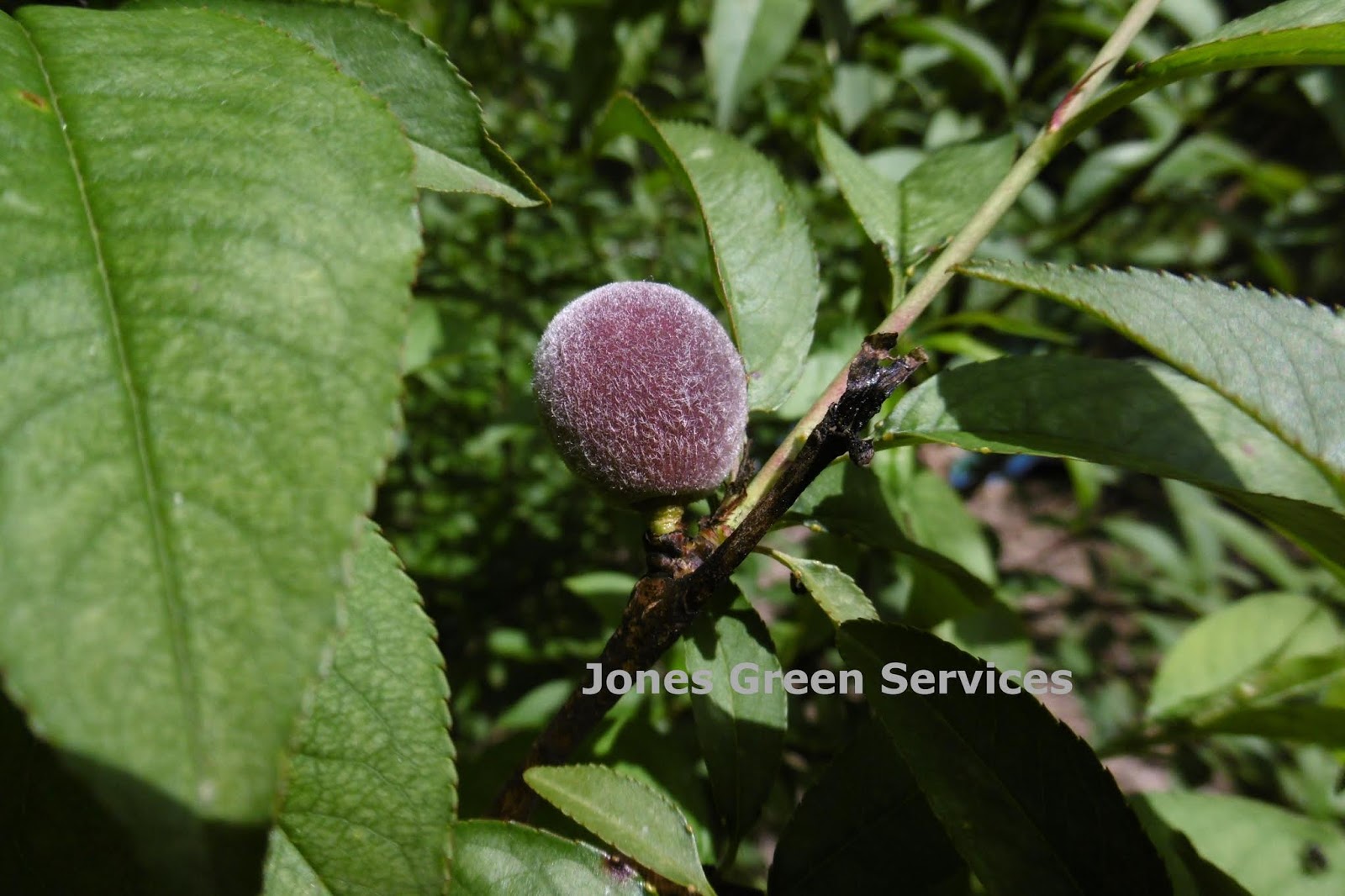
But it isn't all about nature, we have to eat, too. The young peach tree has set fruit for the first tme this year...


... And the pear crop looks promising. too.


One of the butterflies we see quite frequently is the Southern White Admiral.


This one must have only just emerged it was so glossy and almost velvety. Beautiful!


And we still await the patter of tiny green lizard feet!


Comfrey Leaf Experiment

I use comfrey tea a lot for my fruiting and flowering vegetables, giving them a weekly hit of nitrogen (to promote leaf growth) and potassium to aid flowering and fruiting. See this post about making comfrey tea. 


This year I am going to experiment with simply dumping some chopped up comfrey leaves in the bottom of some of the planting holes instead of using a liquid fed during the summer. I am interested to see if the slower but continuous release of nutrients from the rotting leaves is more efficient than the once a week hit from the feed. The decaying plant material may also keep the soil in those areas more moist and water retentive.


I grow six plants each of Roma, San Marzano (both for bottling) and Prince Borghese (for sun-drying) in three rows, so it will be easy enough to treat half one way and half the other. The soil and growing conditions will be largely the same - depending on where the mole decides to tunnel - so if the results are markedly different it should be clear. And if the leaf-in-the-hole plants are starting to lag behind, they can just be inculded in the round of weekly feeds.

Tomato planting will probably begin in the next ten days or so, although some of the plants are still a bit small, and I'll post the results at the end of the summer. And if I find that decaying comfrey leaves are a vole repellent I will be on to a winner!

Happy gardening!

Jobs For May


May is usually a super-busy month in the garden: all the tender vegetables will need to be planted out as and when the conditions allow. Timing is key; the longer they have in the ground the better the harvest is likely to be. This is especially the case for some of the chillies. Last year my two Krishna Jolokia plants only started to set fruit in late October just as the first frosts wiped out the plants. But we must be patient, if the ground hasn't warmed up enough yet, or the weather is too cold, or if the plants are still too small or haven't be hardened off properly then we will have to wait until the  time is right.

The Blow-away greenhouse - stage 2 between the house and the garden.

'Organic' Deer Fencing

Caught on the Trail Cam eating an apple tree.

We are surrounded by kilometres of forest so inevitably we get roe deer in the garden. The only sure way to keep them out is to fully fence the garden, or at least fence the bits we want to keep them out of. 

Earth Day 22nd April

Today will possibly be the strangest of Earth Days here in France, and in much of the rest of the World, too. Lockdown to reduce the spread of the new Coronavirus Covid-19 will stop us visiting any natural places beyond a km from home and with events cancelled, Earth Day here at Le Sarramea will be spent pottering in the garden. But first I'm marking the day with some photos taken during the last week.


The blue honeywort has been as spectacular as ever, humming with bees and other pollinators and self seeding all over the place. I'm having to ruthlessly remove seedlings as the plants can become pretty big and I'm worried they'll crowd out the lower growing sun lovers like the thyme plants.


The fedge, a cross between a hedge and a fence, made by planting and then bending goat willow stems, is starting to take shape. The lower branches are removed, leaving a hedge at the top, giving a light and airy division between the cultivated border and meadow beyond.

Pruning Early Flowering Shrubs & Taking Cuttings

With the first flush of spring behind us it is time to cut back the winter early spring flowering shrubs like this forsythia and some of the shrubby honeysuckles. 

This is also a great opportunity to increase your stock of the plants you like by taking cuttings. I now have half a dozen forsythia scattered around the place but only bought the first one; the rest have come from cuttings taken at this time of the year. But don't go mad - you don't want to end up with a garden crammed with only one or two plants that only flower for a few weeks of the year! We once bought a house with a long rectangular lawn some 10x3m lined on three sides with rows of alternated weigela and potentilla. I have refused to have either in any garden since!


As well as the forsythias I need to cut back a glorious winter flowering honeysuckle fragrantissima, planted outside our bedroom window so we can enjoy the intense fragrance in December and January. Not a total success as the windows are mostly closed in the winter, but it is worth standing in the morning sunshine and breathing in the scent. It will often be visited by bumble bees out for a mid-winter wing stretch and refuel.

The second honeysuckle, a Tatarian Honeysuckle, is a deep pink flowered one, the flowers and leaves coming out together in March. It can be invasive so needs to be managed to prevent it escaping, another reason for cutting hard after flowering to prevent the spread of berries by birds. Apparently it will also reach four metres if left to grow unchecked; I wish to keep it compact so it will be pruned hard in the next few days.


Sowing in Trays Versus Modular Sowing in Individual Pots

Although some plants hate being disturbed so need to be sown direct - carrots and parsnips for example - many benefit from being sown in a protected environment away from predators or extremes of weather. In this way we are more likely to have a high germination rate and higher survival rate. I know from experience here that if I sow a row of lettuces directly into the ground, the slugs will devour the seedlings as they emerge or flea beetles will wipe out most members of the cabbage family before they reach the true leaf stage. 


 Of course other gardens and environments will be different, but this is why we see flowers that produce thousands of seeds - if they all germinated and survived to maturity the world would be overwhelmed with, say cosmos. Would that be such a bad thing!

Jobs for the Month - April


April is a transition month, and a very unpredictable one weather wise, with anything possible from snow to heat waves. 

During March I sowed seeds like mad (and still am) and come early May I will be hoping to plant out everything into the garden. So in April I will need to bring on my tender vegetables - tomatoes, peppers, aubergines and the rest - from vulnerable seedlings to plants that are robust enough to survive life outside planted in the ground. This process, called hardening off, needs to be taken slowly. Young plants used to living indoors will really suffer or possibly die if they get plonked straight outside into the ground. Just imagine how you'd feel - duvet and central heating one day, cold feet, driving rain or intense sunshine the next! Yes, we need to get the plants used to sunshine as well as the cool.

I use a small blow away greenhouse as a half way house, and much of April is spent doing the In Out Plant Shuffle. Initially I'll choose a warm and sunny day to move all the plants out into a shady and sheltered spot for a few hours. I don't put them into full sun: the leaves can scorch and small pots can quickly dry out. In the first year we were here I put a tray of chillies out onto a windowsill and was then side-tracked by a friend arriving with beer. A couple of hours later and there was nothing left but a few shrivelled and crispy remains!

The plants will come back in to the house at night and after about a week of this they will advance to spending their nights in the little greenhouse and some part of their days in the sunshine. It is essential to keep the growing medium moist, but not wet and to avoid getting water on the leaves, as this can make sun scorch much worse. Eventually the plants will be used to living outside day and night, rain and shine. You must watch the weather during this process; any plant that is not frost hardy must come in at night, however tough they've become; my green house will not provide enough protection, or at least not without extra plastic or bubble wrap. And remember if the plants have to spend more than a day or two back inside, the hardening off will have to begin again!


In addition to the In Out Plant Shuffle, April sees continued repeat sowing of 

  • turnips 
  • beetroot 
  • lettuce 
  • radishes 
Plus bulk sowing of

  • red & summer cabbage 
  • carrots 
  • cauliflower 
  • courgettes 
  • perpetual spinach & leaf beet 
  • climbing & dwarf haricot (French beans) 
  • kale
  • peas
  • parsnips
  • sweetcorn
  • various basils, other herbs & flowers as the mood, time and available compost takes me!
I'll be carrying on cutting the grass and the edges of the grass paths in the potager; the grass will be used as mulch on the beds and around both newly planted shrubs and hedges and those that are well established.

In April we will continue enjoying the short asparagus season, and possibly the first globe artichokes of the year, too. We should have lettuces and the last of the leaf beet, too, but otherwise April can be quite bleak in the kitchen garden!

We will also still be under le confinement due to covid-19 until at least the middle of the month and probably right through to the end. In practical turns I am so lucky to have my own garden to sit and work in, to contemplate the incredible quiet, and in which to be distracted from the current situation. 

Stay safe & healthy everyone, and please stay at home!


March in the Garden & le Confinement

We have been in Covid-19 confinement in France since mid March and although some jobbing gardeners have been out at work, we have been following the advice to stay at home. This means that for possibly the first time, I'm largely getting through my weekly gardening to do list and not rolling over too much. I've also had plenty of time to take advantage of the mostly sunny weather (we won't talk about the snow this morning) to take and organise some photos.


Pear Blossom


From a single plant, the coslips are slowing spreading themselves around.


A warm day brings out the butterflies, perhaps this scarce swallowtail likes the warmth from the tyre?


Daffodils at the start of the month, now long-finished.


This new border on a steep bank has railway sleepers at the bottom and is now planted up with (very small) old French roses - hopefully there'll be some progress pictures later in the summer! 


Never forget the birds - will anyone nest in this smelly old boot?

Jobs for the Month - March


March can be a bit of a treadmill - sow seeds, prick out seedlings, pot on young plants, and repeat. I love it! And all the spring tree blossom that is everywhere, too.


Into this frenzy of activity we have to fit in the first cuts of the grass, although as both January and February were so warm and dry, many have already started around here. 


And Sow it Begins! Chillies.

This week is chilli week, a highlight of my seed sowing calendar. I love French food and cooking, but when it comes to buying chillies we are pretty much limited to Espelette, the Basque red pepper which have a pleasant enough flavour, if not especially fiery and the doux de Landes pepper, doux meaning soft or mild in this context ... The large supermarkets in the big smoke of Tarbes may have habaneros from time to time, but the supply and quality is unreliable so not worth the trip. Growing chillies it has to be!


Chilli pepper growing is a huge thing, even for non-gardeners so there is a massive amount of (sometimes conflicting) information out there. As a consequence I'm just going to be sticking to what I do; I would recommend reading around the subject if you wish to become an aficionado! Many people grow, not necessarily for the kitchen, but as a horticultural challenge, and sometimes, I suspect, for the kudos of having the hottest chilli in the world (currently one of the nagas, I think) or the funniest (the peter pepper - look it up with care) growing in the greenhouse. Personally, flavour comes first and second; I like a hot chilli, but it has to have flavour as well as heat. Indeed, I'd rather have something mild and tasty, over one that just blisters the mouth!

February - Jobs for the Month

February always feels like the last calm month in my gardening calendar - from the end of the month until the heat of the summer in July I will be dedicating almost every free moment to the sowing, potting on, planting out and caring for my tender vegetables. This month can give us anything from heavy snow to almost summer like conditions, so be prepared to grab the chance to do the important stuff when you can. So if this sounds like me getting my excuses in early for the paucity of new posts, you could be right.


Once we hit July the focus will switch over to preserving as much of the harvest as possible for the winter months; we don't buy in much veg beyond the potatoes and onions which I struggle to grow, so if the harvest or my ability to preserve it fails, then we could be reduced to a very limited winter diet. This is partly choice; we eat seasonally and also try not to buy food that has covered great distances, bananas and the occasional pineapple excepted. Consequently  we don't eat warm climate veggies such as tomatoes, peppers or courgettes right through the year. This keeps our small housekeeping budget in check, reduces our carbon footprint and makes the first freshly picked tomato all the more sweet!


Seed Sowing - Getting Ahead

I am always tempted to try and get ahead with sowing the seeds of tender vegetables that require a long growing season, things like chillies. We're proper chilliheads and if I cannot get a load of jalapenos pickled for the winter my name is mud!


Last season I had a very average chilli harvest, mostly because the really long, cold and wet spring meant that the plants were slow to get away once planted out. In truth I probably put them out into the ground too soon; cold soil or limited sunshine & the cool weather will have stopped the plants from growing on.

An Introduction to My Garden